Tips & guides
What Happened to Google Guaranteed? The New Google Verified Badge Explained
Google Guaranteed has been replaced by the Google Verified badge, and Local Services Ads are gradually moving inside Google Ads. You still pay per lead, and you still need to pass verification to get the badge.
Last updated:
Introduction
For several years, trade businesses across the United Kingdom and internationally have relied on specific markers of trust to stand out in a crowded digital marketplace. Originally, those who passed Google’s rigorous vetting process were awarded either the Google Guaranteed or Google Screened badge. These icons became synonymous with reliability for locksmiths, plumbers, and electricians, serving as a visual shorthand that told a potential customer their home was in safe hands.
The Mechanics of Local Services Ads for Trades
Understanding how Local Services Ads (LSAs) operate is essential for any trades business looking to maximise their return on investment. Unlike traditional search advertising where you pay for every person who clicks on your link, LSAs operate on a pay-per-lead model. This means you are only charged when a customer takes a specific action, such as calling your business, sending a direct message, or in some specific regions, submitting a booking request. This makes it a highly cost-effective option for businesses like HVAC engineers who want to ensure their marketing budget is tied directly to genuine enquiries.
- You pay for valid leads such as calls and messages rather than simple clicks
- Ads utilize keywordless matching based on your set services and service areas
- Your business appears at the absolute top of Google Search and within Google Maps
- Ranking is influenced by your responsiveness, review score, and proximity to the customer
Key Ranking Factors for the Verified Badge
Simply having the Google Verified badge is not enough to guarantee the top spot; your performance and reputation play a critical role in where your ad appears. Google prioritises businesses that demonstrate high levels of customer satisfaction and operational efficiency. One of the most important factors is your responsiveness. If a plumber consistently misses calls or takes too long to reply to messages, their ranking will drop because Google wants to ensure the user has a positive experience.
Major Platform Changes Incoming for 2026
The landscape of Google advertising is set to undergo a significant shift as we approach 2026. Google has begun the process of migrating Local Services Ads into the main Google Ads interface, reclassifying them as Performance Max campaigns with specific pay-per-lead goals. This transition has already commenced with selected home-service businesses in the United States and is scheduled to expand to more trade categories and different countries over the coming months and years.
Navigating the Verification Process
Becoming a Google Verified business is a comprehensive process that requires attention to detail and patience. The requirements vary depending on your specific trade and the country in which you operate. For example, a gas engineer will likely face different documentation requirements compared to a domestic cleaner. It is vital to prepare all your documentation in advance to avoid delays in your ads going live.
Verification typically involves thorough background checks on the business owners and, in some instances, the field employees. You will also need to provide valid insurance certificates and trade licences that are compliant with your local regulations. Because this process involves manual review by Google's team, it can take several weeks to complete. It is highly recommended that you begin the application process well before you actually need the influx of new leads.
- Complete background and business entity checks tailored to your trade
- Submit up-to-date licence and insurance details as required by your location
- Maintain a Google Business Profile populated with genuine customer reviews
- Allow for significant lead time as the verification process is not instantaneous
Common Strategic Mistakes to Avoid
Many businesses fail to see the full potential of the Google Verified badge because of simple operational errors. One of the most frequent mistakes is failing to treat the leads with urgency. In the world of emergency trades, a lead can go cold in minutes. If you are not answering your phone or checking your LSA dashboard regularly, you are not only losing immediate work but also damaging your future visibility on the platform.
Another trap is the 'set and forget' mentality regarding service areas and lead quality. If you set your service area too wide, you may end up paying for leads in locations that are not profitable for you to visit. Similarly, if you receive a poor-quality lead that is outside of your trade or area, you must provide feedback through the dashboard. This helps Google’s system learn which customers are right for you, ultimately refining your targeting and improving your return on investment over time.
- Failing to answer calls promptly which negatively impacts your ranking
- Claiming a service area that is too large for your team to realistically cover
- Neglecting to provide feedback on poor-quality leads to help Google optimize your reach
- Using LSAs as a total replacement for standard search ads rather than a complementary tool
Integrating LSAs into Your Wider Marketing Plan
While the Google Verified badge is a powerful tool, it should be viewed as one part of a broader marketing ecosystem. For many trades, it works best when paired with traditional Google Search campaigns and a robust search engine optimisation (SEO) strategy. For example, while LSAs capture the 'ready to hire' emergency market, traditional search ads can target customers in the research phase who might be looking for long-term project quotes rather than immediate repairs.
A strong Google Maps presence is also vital. Even if you are not running Local Services Ads, your Google Business Profile remains the foundation of your local reputation. Ensure your profile is fully optimised with high-quality photos of your work, clear descriptions of your services, and regular updates. This ensures that even when you aren't paying for leads, your business remains visible to local customers through organic search results.
Availability and Regional Variations
It is important to note that the Local Services Ads programme and the accompanying Google Verified badge are not universally available. Availability is restricted to specific countries and specific trade categories. Furthermore, the features within the platform, such as the ability to dispute leads or receive lead credits, can differ significantly from one region to another. A plumber in London may have access to different features and tools than a locksmith in another part of the world.
Before building your entire lead generation strategy around Google Verified, you must check the current availability for your specific trade and location. If the programme has not yet launched for your industry or area, do not be discouraged. You can achieve excellent results by focusing on regular Google Ads and building a dominant presence on Google Maps through consistent review acquisition and profile management.
- Check regional availability for your specific trade before planning
- Be aware that lead credit policies and dashboard features vary by country
- Utilise standard Google Ads if the Verified badge is not yet available in your area
- Prioritise a strong Google Maps presence as a foundational marketing element
More articles
 How to Advertise on Google Maps and Show Up in 'Near Me' Searches
To show up in 'near me' searches on Google Maps you need a complete, verified Business Profile, genuine reviews and local ads linked to that profile. The profile decides whether you appear; the ads help you appear when competition is high.
 What Are Google Local Services Ads, and Are They Worth It for Trades?
Google Local Services Ads are ads at the top of Google for verified tradespeople, where you pay per lead rather than per click. They are worth it mainly for businesses that pass verification, answer the phone quickly and keep good reviews.
 Call Tracking for Trades: From Phone Call to Job Profit, and Back to Google Ads
You know how much profit each call brought by linking the call to the job in your job system and calculating profit after materials, labour and travel. Then send that value back to Google as an offline conversion so the campaign learns to bring more profitable jobs.
- How to Set Up and Update a Google Business Profile: A Guide for Trades
You create a Google Business Profile by searching for your business name or going to business.google.com, setting your service areas and verifying, usually by video. You update it from Google Search or the Google Maps app.
 How to Get Your Trade Business Listed in Local Directories (UK Guide)
Get listed in local directories using the same business name, address and phone number everywhere, starting with the most important directories in your country and trade. Consistent listings help customers and Google trust the business, without paying for promises.
- How to Run Google Ads Alongside Local Services Ads on One Budget (and What to Expect)
Combine the two by letting Local Services Ads capture leads at a per-lead price while a search campaign covers services and areas they do not. Split one monthly budget by demand for each job type, and expect results to improve gradually rather than on day one.
 What Do You Need for Local Services Ads? Requirements and Job Types by Trade
Before a Local Services Ads campaign, prepare the licence and insurance documents Google requires for your trade, your service areas, opening hours and a list of job types. This preparation shortens verification and prevents leads for work you do not do.
 What Do Chat Ads Look Like? ChatGPT Ads Examples for Trades
Chat ads look like a short card marked 'Sponsored' below an answer, with a headline, one line of text and a button. A good chat ad answers exactly the question asked in the conversation, as the trade examples on this page show.
 AI receptionist for law firms: answering every enquiry without missing a client
An AI receptionist answers a law firm's calls when the team is in court, in meetings or closed, collects initial-check details and books a consultation. It gives no legal advice, and urgent matters are transferred straight to a solicitor.
 AI voice agent for clinics: bookings and calls when the front desk is busy
An AI voice agent for clinics books and reschedules appointments when the front desk is busy or closed, within the calendar rules the clinic sets. It gives no medical advice, and urgent calls are passed to a person or emergency services.
 How to Save Money on Google Ads and Paid Advertising
You save money on paid advertising by giving each campaign one clear goal, blocking searches that never bring customers and measuring real enquiries rather than clicks. Start with small tests and move budget only to what has proven itself.
- Google Ads Best Practices: What to Do in Every Campaign
Every Google Ads campaign should start with working conversion tracking, keywords that match the service and a landing page that answers the search exactly. After launch, review search terms weekly and decide monthly what to scale and what to stop.
 Common Google Ads Mistakes (and How to Avoid Them)
The most common Google Ads mistakes are running without conversion tracking, matching keywords too broadly, sending everyone to the homepage and judging results too early. You avoid them with organised tracking, negative keywords and a landing page for each service.
- How Do ChatGPT Ads Work, and Are They Worth It?
ChatGPT Ads are clearly labelled ads shown below ChatGPT answers, managed through OpenAI's Ads Manager and targeted by conversation context rather than exact keywords. They are worth testing when your service comes up in those conversations, the format is available in your country and you measure real leads.
- How Much Does Google Ads Cost for a Small Business?
There is no fixed price: what Google Ads costs a small business depends on competition in your trade and area, how well the campaign is built and how management is charged. Media spend and management fees are separate, so understand both before you start.
 Are Bing Ads Worth It for Small Businesses?
Yes, for many small businesses Bing Ads are worth it, because Microsoft Advertising reaches an additional audience, often at a lower cost per click than Google. If you already run Google Ads you can import your campaigns and start on a small budget.
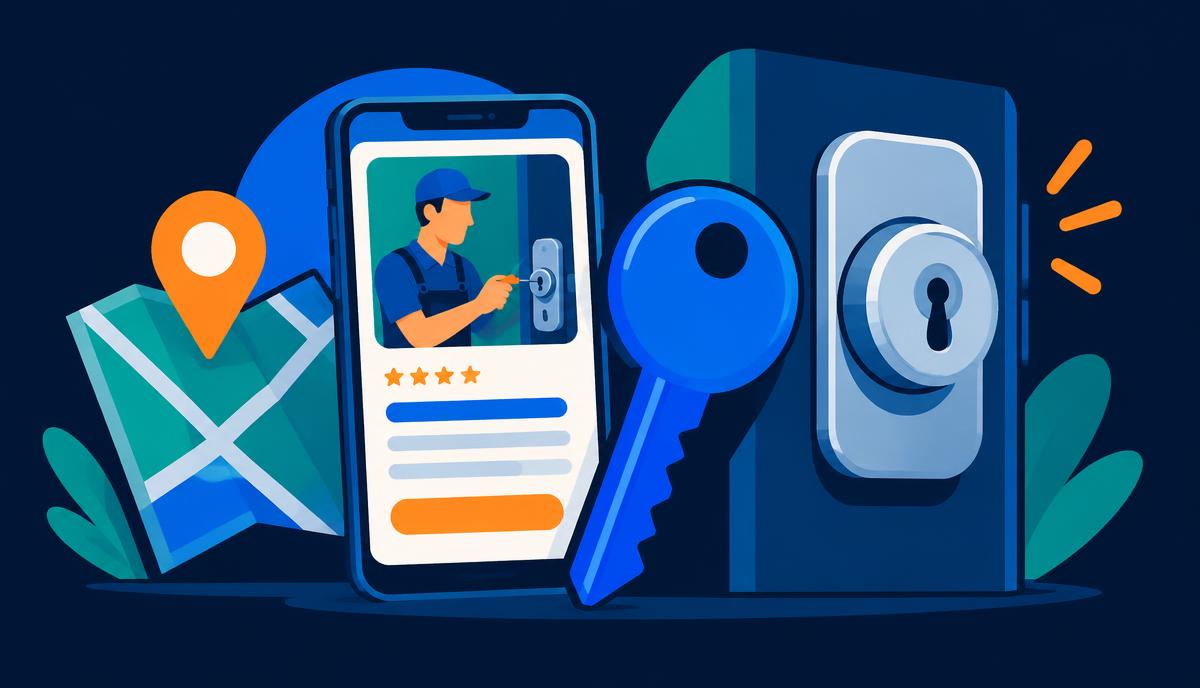 How to Advertise a Locksmith Business and Get More Emergency Calls
A locksmith gets more emergency calls by appearing at the top of Google and Maps in their service area, with ads that invite a call and a phone that is answered immediately. Keep emergency work separate from planned jobs and block do-it-yourself searches.
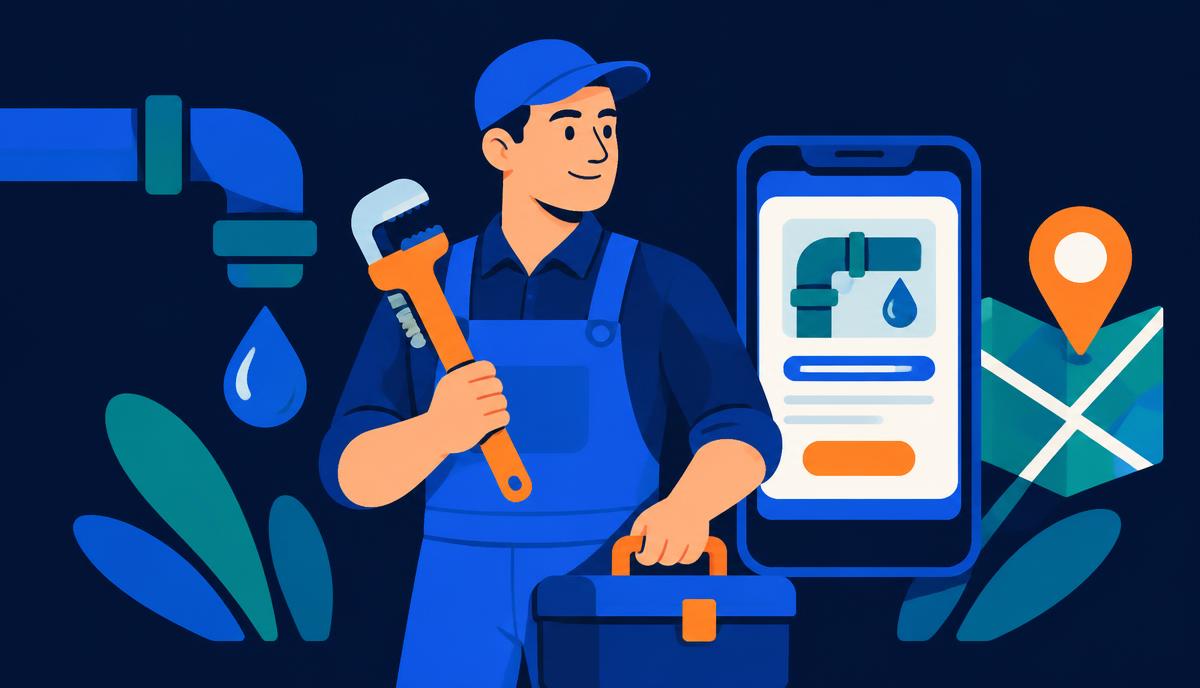 Google Ads for Plumbers: How to Get More Plumbing Jobs
Plumbers get more jobs from Google by splitting campaigns by job type — emergencies versus planned work — and targeting each to their service area. Block irrelevant searches and measure which calls actually became jobs.
 How to Get More Electrician Jobs with Google Ads
Electricians get more jobs from Google Ads by running separate campaigns for urgent faults, planned installations and commercial clients. Ads that show credentials, plus tracking of real enquiries, show where the budget should go.
 Advertising for Heating and Air Conditioning Businesses: Planning Around the Seasons
Heating and air conditioning businesses advertise year-round by planning budgets around the seasons, increasing spend in hot or cold spells and reducing it in quiet periods. Separate repairs from installations, and keep existing customers through service and maintenance plans.
Let's Find the Right Approach for Your Business
Tell us what you're trying to achieve and we'll suggest a sensible starting point.