Tips & guides
AI receptionist for law firms: answering every enquiry without missing a client
An AI receptionist answers a law firm's calls when the team is in court, in meetings or closed, collects initial-check details and books a consultation. It gives no legal advice, and urgent matters are transferred straight to a solicitor.
Last updated:
Direct answer
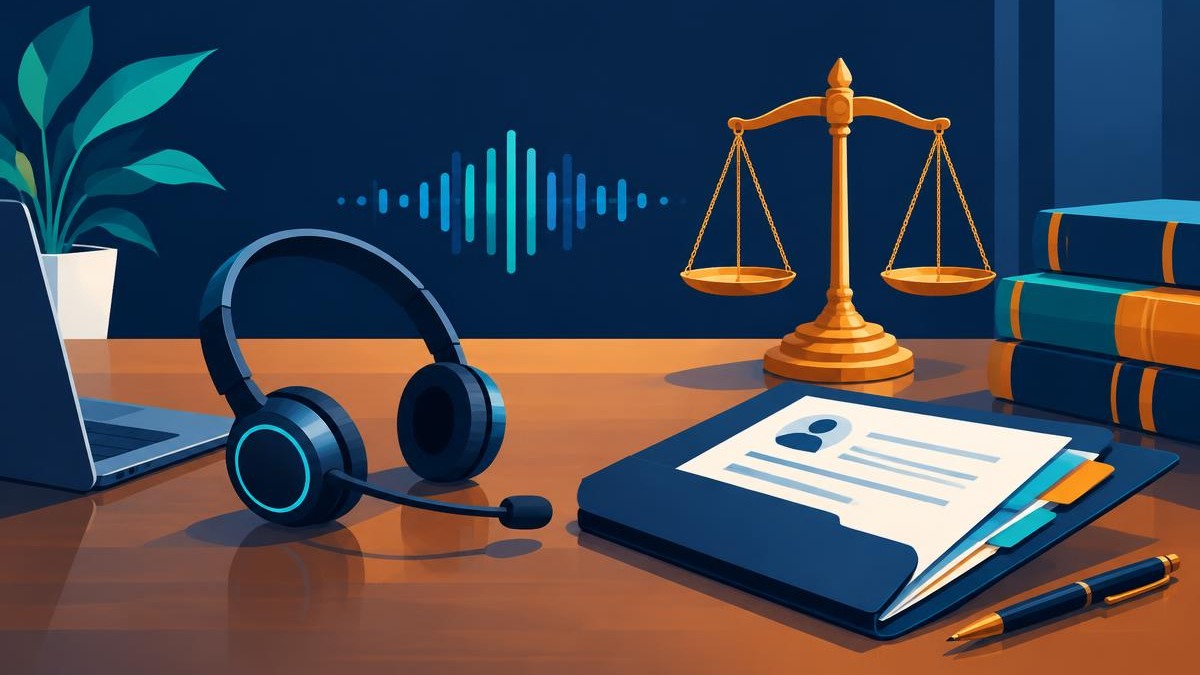
An AI receptionist can answer new law firm enquiries when the team is in a meeting, at court or closed for the day. It captures the caller's details, the reason for the call and the information your firm requests for an initial check, then arranges a callback or consultation without giving legal advice. Your team receives an organised intake record instead of a short voicemail or a missed call.
Three ways to use an AI receptionist in a firm
You do not have to move every telephone call to an agent on day one. The right structure depends on opening hours, reception cover, practice areas and which conversations must reach a lawyer immediately. Start with one mode, review summary quality and expand only when the process works.
- After hours: the agent answers in the evening, at weekends and during closures, captures the new enquiry and offers an appropriate callback time.
- Overflow / busy: your human receptionist remains the first point of contact, and the agent answers only when the team is occupied or unavailable.
- Always-on front desk: the agent answers every call, identifies the request and transfers to a lawyer or member of staff by topic, urgency and availability.
New-client intake without giving legal advice
The script must separate information gathering from a legal answer. The agent can ask about the general topic, when an event happened, any deadlines the caller mentions and whether documents may be available later. It does not decide whether a claim exists, recommend a course of action or promise representation.
When a caller asks for an opinion, the approved response explains that the assistant is not a lawyer and cannot advise on the matter. It offers to pass the details to the firm or arrange a consultation. Even apparently simple questions follow that boundary: the knowledge base contains administrative information about the firm, not case-specific answers or legal interpretations.
Collecting conflict-check details responsibly
The firm decides which details are needed for its initial check. That may include the parties' names, other people or organisations connected with the matter, the broad practice area and reliable contact details. The agent asks the approved questions in order and makes clear that the information is for the firm's review, not confirmation that a check is complete or representation has been accepted.
Confidentiality matters as much as the wording. During setup, decide who can see a summary, where it is sent, which sensitive details should not be collected on the first call and how unnecessary recording or retention is avoided. Calendar and CRM connections follow the firm's existing permissions and working practices rather than bypassing them.
What happens after the call
The call does not end with a recording waiting in an inbox. As soon as it finishes, three things happen according to the settings the firm approved. Urgent matters, such as an arrest or an imminent court date, are transferred during the call to an available lawyer or the person on duty, and an enquiry outside the firm's practice areas ends politely without legal guidance.
- An instant WhatsApp message to the lawyer or firm with the caller's name, phone number, reason for calling and urgency.
- The details are entered automatically into the firm's own system — CRM, calendar or case management — so nobody has to retype them.
- A WhatsApp confirmation is sent to the caller only if the caller agrees during the call.
A short setup checklist
Before the discovery call, gather the rules your firm already uses and identify where intake currently slows down. A precise short list makes the script easier to test.
- Practice areas the firm accepts and matters it should decline.
- Intake and conflict-check questions approved by a lawyer.
- Answering hours, backup contacts and transfer numbers by topic and urgency.
- Calendar rules for consultation type, length, spacing, location and confirmation.
- Statements the agent must never make and approved administrative answers.
- Who receives summaries, where they are stored and which details not to collect.
- Notice covering the AI assistant and recording if it is enabled.
- How staff mark a suitable enquiry, booked consultation and accepted client.
Test calls and a weekly review
Test more than the ideal path. Include a caller demanding immediate advice, someone struggling to explain the issue, an approaching deadline, an irrelevant enquiry, conversations in Hebrew and English, and a transfer when nobody is available. Test rescheduling, cancellation and delivery of the summary as well.
After launch, review sample calls with the firm. Rewrite confusing questions, adjust routing if too many calls are transferred and change the intake order if conflict-check information is missing. The review improves the process; it does not hide mistakes or replace professional judgement. Keep a record of script and behaviour changes so everyone knows which version is active.
How to judge whether it is worthwhile
The main measure is not the number of calls answered but what happened afterwards. Connect the enquiry to the calendar or CRM and mark a booked consultation, an attended consultation, an accepted client and verified revenue where the firm has reliable data. This separates a high call volume from cover that produces suitable new matters.
If enquiries come from Google Ads, call and job outcomes can also inform campaign measurement. Our guide to call tracking and job profit explains how to preserve an enquiry identifier, calculate value and send offline conversions back to Google. Without paid advertising, the same recording habit shows which hours and answering modes produce useful enquiries and where the intake process still needs work.
More articles
 AI voice agent for clinics: bookings and calls when the front desk is busy
An AI voice agent for clinics books and reschedules appointments when the front desk is busy or closed, within the calendar rules the clinic sets. It gives no medical advice, and urgent calls are passed to a person or emergency services.
 How to Save Money on Google Ads and Paid Advertising
You save money on paid advertising by giving each campaign one clear goal, blocking searches that never bring customers and measuring real enquiries rather than clicks. Start with small tests and move budget only to what has proven itself.
 Google Ads Best Practices: What to Do in Every Campaign
Every Google Ads campaign should start with working conversion tracking, keywords that match the service and a landing page that answers the search exactly. After launch, review search terms weekly and decide monthly what to scale and what to stop.
 Common Google Ads Mistakes (and How to Avoid Them)
The most common Google Ads mistakes are running without conversion tracking, matching keywords too broadly, sending everyone to the homepage and judging results too early. You avoid them with organised tracking, negative keywords and a landing page for each service.
 How Do ChatGPT Ads Work, and Are They Worth It?
ChatGPT Ads are clearly labelled ads shown below ChatGPT answers, managed through OpenAI's Ads Manager and targeted by conversation context rather than exact keywords. They are worth testing when your service comes up in those conversations, the format is available in your country and you measure real leads.
- How Much Does Google Ads Cost for a Small Business?
There is no fixed price: what Google Ads costs a small business depends on competition in your trade and area, how well the campaign is built and how management is charged. Media spend and management fees are separate, so understand both before you start.
 Are Bing Ads Worth It for Small Businesses?
Yes, for many small businesses Bing Ads are worth it, because Microsoft Advertising reaches an additional audience, often at a lower cost per click than Google. If you already run Google Ads you can import your campaigns and start on a small budget.
 How to Advertise a Locksmith Business and Get More Emergency Calls
A locksmith gets more emergency calls by appearing at the top of Google and Maps in their service area, with ads that invite a call and a phone that is answered immediately. Keep emergency work separate from planned jobs and block do-it-yourself searches.
 Google Ads for Plumbers: How to Get More Plumbing Jobs
Plumbers get more jobs from Google by splitting campaigns by job type — emergencies versus planned work — and targeting each to their service area. Block irrelevant searches and measure which calls actually became jobs.
 How to Get More Electrician Jobs with Google Ads
Electricians get more jobs from Google Ads by running separate campaigns for urgent faults, planned installations and commercial clients. Ads that show credentials, plus tracking of real enquiries, show where the budget should go.
 Advertising for Heating and Air Conditioning Businesses: Planning Around the Seasons
Heating and air conditioning businesses advertise year-round by planning budgets around the seasons, increasing spend in hot or cold spells and reducing it in quiet periods. Separate repairs from installations, and keep existing customers through service and maintenance plans.
 What Happened to Google Guaranteed? The New Google Verified Badge Explained
Google Guaranteed has been replaced by the Google Verified badge, and Local Services Ads are gradually moving inside Google Ads. You still pay per lead, and you still need to pass verification to get the badge.
 How to Advertise on Google Maps and Show Up in 'Near Me' Searches
To show up in 'near me' searches on Google Maps you need a complete, verified Business Profile, genuine reviews and local ads linked to that profile. The profile decides whether you appear; the ads help you appear when competition is high.
 What Are Google Local Services Ads, and Are They Worth It for Trades?
Google Local Services Ads are ads at the top of Google for verified tradespeople, where you pay per lead rather than per click. They are worth it mainly for businesses that pass verification, answer the phone quickly and keep good reviews.
 Call Tracking for Trades: From Phone Call to Job Profit, and Back to Google Ads
You know how much profit each call brought by linking the call to the job in your job system and calculating profit after materials, labour and travel. Then send that value back to Google as an offline conversion so the campaign learns to bring more profitable jobs.
- How to Set Up and Update a Google Business Profile: A Guide for Trades
You create a Google Business Profile by searching for your business name or going to business.google.com, setting your service areas and verifying, usually by video. You update it from Google Search or the Google Maps app.
 How to Get Your Trade Business Listed in Local Directories (UK Guide)
Get listed in local directories using the same business name, address and phone number everywhere, starting with the most important directories in your country and trade. Consistent listings help customers and Google trust the business, without paying for promises.
- How to Run Google Ads Alongside Local Services Ads on One Budget (and What to Expect)
Combine the two by letting Local Services Ads capture leads at a per-lead price while a search campaign covers services and areas they do not. Split one monthly budget by demand for each job type, and expect results to improve gradually rather than on day one.
- What Do You Need for Local Services Ads? Requirements and Job Types by Trade
Before a Local Services Ads campaign, prepare the licence and insurance documents Google requires for your trade, your service areas, opening hours and a list of job types. This preparation shortens verification and prevents leads for work you do not do.
- What Do Chat Ads Look Like? ChatGPT Ads Examples for Trades
Chat ads look like a short card marked 'Sponsored' below an answer, with a headline, one line of text and a button. A good chat ad answers exactly the question asked in the conversation, as the trade examples on this page show.
Let's Find the Right Approach for Your Business
Tell us what you're trying to achieve and we'll suggest a sensible starting point.