Tips & guides
Google Ads for Plumbers: How to Get More Plumbing Jobs
Plumbers get more jobs from Google by splitting campaigns by job type — emergencies versus planned work — and targeting each to their service area. Block irrelevant searches and measure which calls actually became jobs.
Last updated:
Introduction
Developing a robust digital presence is essential for plumbing businesses looking to grow in a competitive local market. Google Ads provides a direct route to customers who are actively searching for services, but success requires more than just bidding on generic terms. To truly maximize return on investment, tradesmen must understand the nuances of search intent and how the platform delivers different types of leads.
Two kinds of plumbing customer
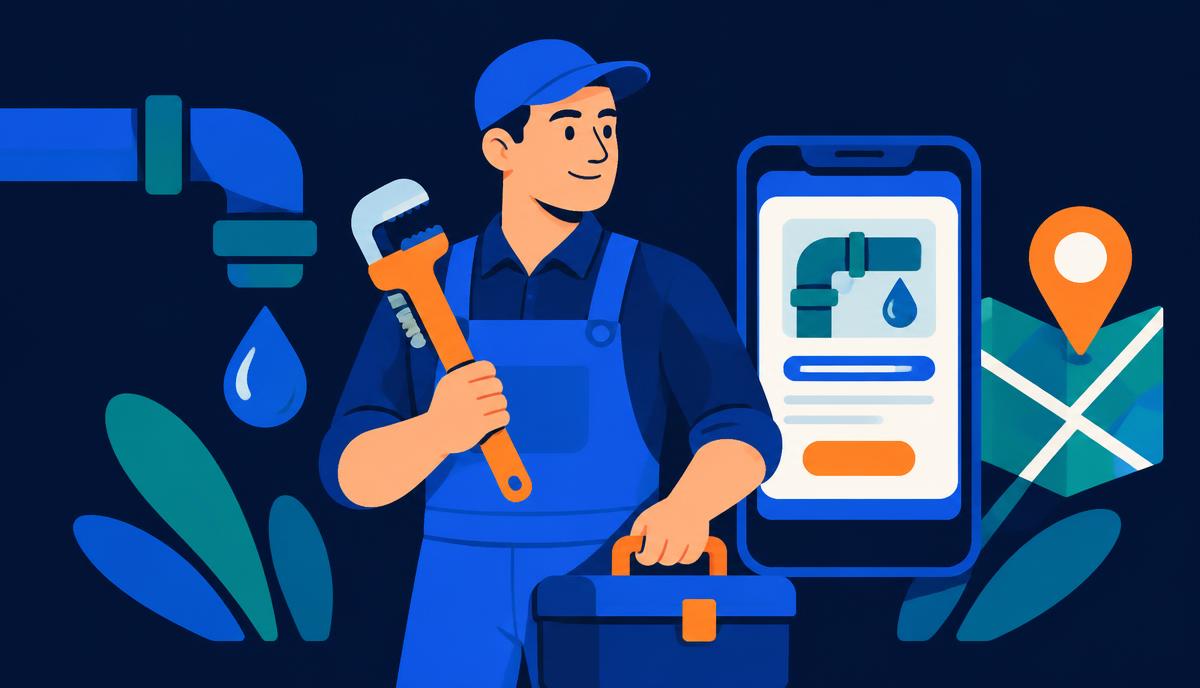
The most fundamental mistake in plumbing advertising is treating all searches as equal. In reality, there are two distinct types of customers. An emergency customer with a burst pipe or a leaking tap is in a state of high urgency. They typically search from a mobile device, look for the quickest response, and prioritize phone calls over filling in forms. They want someone now and will often call the first reputable-looking business they find.
Channels that fit the plumbing trade
While Google is the dominant force in search, a comprehensive strategy often involves a mix of platforms tailored to different service offerings. For the plumbing trade, diversity in lead generation helps maintain a steady flow of work throughout the year.
- Google Search: The primary tool for capturing emergency and high-intent searches when a customer needs a plumber immediately.
- Local Services Ads: Where available, these provide verified local visibility, showing your business at the very top of the search results with a trust mark.
- Microsoft Advertising: A complementary channel that is often less crowded and can reach older demographics who use default desktop search engines.
- Meta Ads and Remarketing: Ideal for planned, higher-value work like bathroom fit-outs, where visual inspiration and repeated brand exposure help close the sale.
Negative keywords matter more than you think
Managing what you do not show up for is just as important as choosing your target keywords. Negative keywords prevent your ads from appearing for searches that will never result in a paid job, saving you significant sums in wasted ad spend. Every plumbing business should maintain a robust list of exclusions that is updated weekly.
For example, you should block DIY enthusiasts who are looking for instructions rather than a professional. If someone searches for how to fix a leaking radiator, they are likely trying to do the work themselves. Similarly, you want to avoid people looking for parts or tools rather than a service. A regular review of the search terms report allows you to identify these irrelevant queries and exclude them permanently.
- Block job seekers: Exclude searches including terms like jobs, course, apprenticeship, and salary.
- Block DIY and product searches: Exclude terms like how to, parts, tools, and specific hardware store names.
- Review the search terms report regularly to identify new phrases that are draining your budget without providing leads.
Landing pages that convert visitors to callers
The job of the ad is to get the click; the job of the landing page is to get the lead. Sending all your traffic to a generic homepage is a common pitfall. Instead, the page a user lands on should be a direct reflection of what they were searching for. This alignment builds trust and makes it easier for the customer to take the next step.
For emergency work, the landing page must be mobile-optimized with a prominent, clickable phone number right at the top. It should clearly state the areas you cover and highlight trust factors, such as certifications or rapid response times. For planned work, the page needs to provide more depth. It should include detailed descriptions of the service, high-quality photographs of real work you have completed, and a simple, intuitive quote form. Each page should strictly match the promise made in the original advertisement.
Step-by-step landing page optimization
To improve your conversion rate, follow a logical structure for your page design. Start with a clear headline that confirms you provide the specific service the user needs in their local area. Follow this immediately with a call to action, such as a Call Now button for mobile users or a Get a Quote button for those on desktops.
Include a section on why customers trust you, perhaps mentioning your years of experience or local reputation. Brief bullet points are often more effective than long paragraphs, as people tends to skim-read when they are in a hurry. Finally, ensure the page loads quickly. A slow-loading website is one of the fastest ways to lose a potential plumbing lead to a competitor.
Measure the real outcome of every click
Many businesses make the mistake of measuring success based on cost per click. However, a cheap click is worthless if it does not lead to a paying job. To truly understand your marketing performance, you must track both phone calls and contact form submissions. By integrating your lead tracking with your sales data, you can identify which specific keywords and campaigns are generating the most profitable work.
Optimizing for qualified inquiries rather than every single inquiry tells the advertising platform what a good customer looks like. If you mark which leads became actual quotes and which quotes became completed jobs, you can feed this data back into the system. This allows the algorithm to focus your budget on finding more people like your best customers, rather than just anyone who is looking for a plumber.
Refining your strategy over time
Google Ads is not a set-and-forget tool. The plumbing market changes with the seasons; boiler repairs peak in winter, while renovations might be more popular in the spring. Monitoring these trends allows you to shift your budget to where the demand is highest. Regularly testing different ad copy and different call-to-actions will help you stay ahead of local competitors who may be running stagnant campaigns.
Continuous improvement involves looking at the data to see which times of day and which days of the week produce the best leads. If you find that you get high-quality emergency calls on Saturday mornings but very little during Tuesday afternoons, you can adjust your bidding strategy to be more aggressive during those peak times, ensuring you are always the first choice for a customer in need.
When to bring in a specializt
Managing a complex Google Ads account while also running a busy plumbing business can be overwhelming. If you find that leads are coming in but few of them are converting into actual jobs, it is often a sign that your targeting is slightly off. Likewise, if you cannot definitively say which campaign brought in a specific customer, your measurement and tracking need attention.
A specializt can review your account to identify wasted spend and missed opportunities. By splitting campaigns properly, refining your negative keyword lists, and setting up a measurement system you can trust, a professional can help ensure every pound spent on advertising contributes to the growth and profitability of your business.
More articles
 How to Get More Electrician Jobs with Google Ads
Electricians get more jobs from Google Ads by running separate campaigns for urgent faults, planned installations and commercial clients. Ads that show credentials, plus tracking of real inquiries, show where the budget should go.
 HVAC Advertising: Planning Campaigns Around the Seasons
Heating and air conditioning businesses advertise year-round by planning budgets around the seasons, increasing spend in hot or cold spells and reducing it in quiet periods. Separate repairs from installations, and keep existing customers through service and maintenance plans.
 What Happened to Google Guaranteed? The New Google Verified Badge Explained
Google Guaranteed has been replaced by the Google Verified badge, and Local Services Ads are gradually moving inside Google Ads. You still pay per lead, and you still need to pass verification to get the badge.
 How to Advertise on Google Maps and Show Up in 'Near Me' Searches
To show up in 'near me' searches on Google Maps you need a complete, verified Business Profile, genuine reviews and local ads linked to that profile. The profile decides whether you appear; the ads help you appear when competition is high.
 What Are Google Local Services Ads, and Are They Worth It for Trades?
Google Local Services Ads are ads at the top of Google for verified tradespeople, where you pay per lead rather than per click. They are worth it mainly for businesses that pass verification, answer the phone quickly and keep good reviews.
 Call Tracking for Trades: From Phone Call to Job Profit, and Back to Google Ads
You know how much profit each call brought by linking the call to the job in your job system and calculating profit after materials, labour and travel. Then send that value back to Google as an offline conversion so the campaign learns to bring more profitable jobs.
- How to Set Up and Update a Google Business Profile: A Guide for Trades
You create a Google Business Profile by searching for your business name or going to business.google.com, setting your service areas and verifying, usually by video. You update it from Google Search or the Google Maps app.
 How to Get Your Contractor Business Listed in Local Directories
Get listed in local directories using the same business name, address and phone number everywhere, starting with the most important directories in your country and trade. Consistent listings help customers and Google trust the business, without paying for promises.
- How to Run Google Ads With Local Services Ads on One Budget (and What to Expect)
Combine the two by letting Local Services Ads capture leads at a per-lead price while a search campaign covers services and areas they do not. Split one monthly budget by demand for each job type, and expect results to improve gradually rather than on day one.
 What Do You Need for Local Services Ads? Requirements and Job Types by Trade
Before a Local Services Ads campaign, prepare the licence and insurance documents Google requires for your trade, your service areas, opening hours and a list of job types. This preparation shortens verification and prevents leads for work you do not do.
 What Do Chat Ads Look Like? ChatGPT Ads Examples for Contractors
Chat ads look like a short card marked 'Sponsored' below an answer, with a headline, one line of text and a button. A good chat ad answers exactly the question asked in the conversation, as the trade examples on this page show.
 How to Save Money on Google Ads and Paid Advertising
You save money on paid advertising by giving each campaign one clear goal, blocking searches that never bring customers and measuring real inquiries rather than clicks. Start with small tests and move budget only to what has proven itself.
- Google Ads Best Practices: What to Do in Every Campaign
Every Google Ads campaign should start with working conversion tracking, keywords that match the service and a landing page that answers the search exactly. After launch, review search terms weekly and decide monthly what to scale and what to stop.
 Common Google Ads Mistakes (and How to Avoid Them)
The most common Google Ads mistakes are running without conversion tracking, matching keywords too broadly, sending everyone to the homepage and judging results too early. You avoid them with organized tracking, negative keywords and a landing page for each service.
- How Do ChatGPT Ads Work, and Are They Worth It?
ChatGPT Ads are clearly labelled ads shown below ChatGPT answers, managed through OpenAI's Ads Manager and targeted by conversation context rather than exact keywords. They are worth testing when your service comes up in those conversations, the format is available in your country and you measure real leads.
- How Much Does Google Ads Cost for a Small Business?
There is no fixed price: what Google Ads costs a small business depends on competition in your trade and area, how well the campaign is built and how management is charged. Media spend and management fees are separate, so understand both before you start.
 Are Bing Ads Worth It for Small Businesses?
Yes, for many small businesses Bing Ads are worth it, because Microsoft Advertising reaches an additional audience, often at a lower cost per click than Google. If you already run Google Ads you can import your campaigns and start on a small budget.
 How to Advertise a Locksmith Business and Get More Emergency Calls
A locksmith gets more emergency calls by appearing at the top of Google and Maps in their service area, with ads that invite a call and a phone that is answered immediately. Keep emergency work separate from planned jobs and block do-it-yourself searches.
Let's Find the Right Approach for Your Business
Tell us what you're trying to achieve and we'll suggest a sensible starting point.