Tips & guides
How Do ChatGPT Ads Work, and Are They Worth It?
ChatGPT Ads are clearly labelled ads shown below ChatGPT answers, managed through OpenAI's Ads Manager and targeted by conversation context rather than exact keywords. They are worth testing when your service comes up in those conversations, the format is available in your country and you measure real leads.
Last updated:
Introduction
The digital advertising landscape is shifting as users increasingly turn to artificial intelligence for answers that were previously sought through traditional search engines. For trades businesses like locksmiths, plumbers, and HVAC engineers, this represents a new frontier for lead generation. ChatGPT has integrated a sponsored content model that allows businesses to appear directly within the conversational flow of the AI assistant.
These advertisements are distinct from the organic text generated by the model. They appear as clearly labelled sponsored units positioned below the AI's primary response. For a local service provider, this means your business can be presented as a solution at the exact moment a user is seeking advice on a specific problem, such as how to repair a leaking tap or how to upgrade a home security system.
What are ChatGPT Ads?
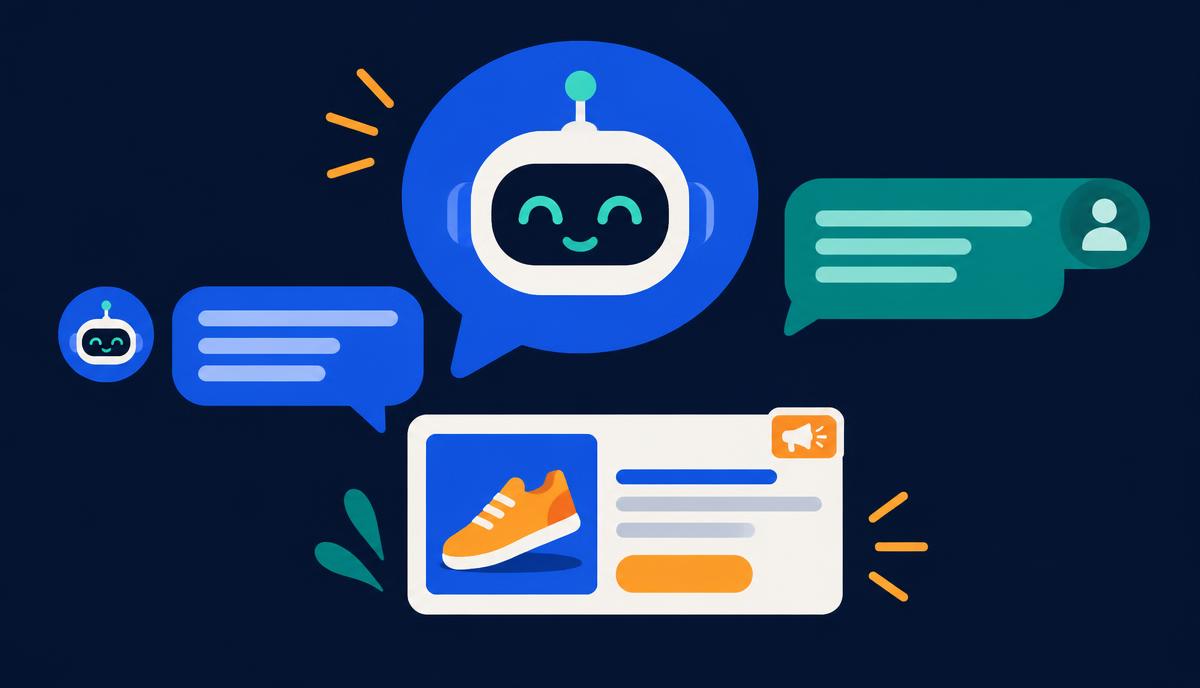
ChatGPT ads are structured visual units that appear for users on the free tier of the platform. Each advertisement is comprised of several key elements designed to build trust and encourage a click-through. These include your business name and logo, a compelling headline, a concise description of your services, a relevant image, and a direct link to your website or landing page.
It is important to note the specific audience segments that interact with these ads. Currently, paying subscribers and those using enterprise or business accounts do not see any advertising content. This means the channel specifically targets the vast number of users on free plans. For a tradesperson, this provides a visual way to stand out, using a high-quality logo and imagery that reinforces professionalism while the AI provides the informational context.
Where and how you buy them
Managing these campaigns is handled through OpenAI's self-serve Ads Manager. The platform initially launched in the United States in early 2026 and has rapidly expanded its reach to over 60 countries, covering significant portions of Europe and the Middle East. This self-serve model allows businesses to set their own budgets and control their creative assets without needing a third-party intermediary, mirroring the accessibility of established social media ad managers.
When setting up a campaign, you have the choice between buying impressions or clicks. Buying impressions ensures your brand is seen by a specific volume of people, while buying clicks focuses on driving traffic to your site. Because availability still varies significantly depending on your geographical location, it is essential to consult the current list of supported regions before allocating a marketing budget to this channel.
How targeting works — there are no keywords
The most significant departure from traditional search engine marketing is the absence of keyword bidding. In a typical search campaign, a plumber might bid on the term 'emergency boiler repair'. In ChatGPT, the system uses 'context hints'. Instead of specific words, you provide descriptions of the conversations and topics where your offer would be most helpful. The AI then matches your ad to the specific dialogue the user is having with the assistant.
This shift requires a focus on the intent of the conversation rather than just the vocabulary. For example, if a user is asking for advice on how to prevent pipes from freezing during a cold snap, the system identifies this as a relevant context for an HVAC or plumbing business. Because you are not competing for a single word, the strength of your creative offer and the relevance of your landing page become the primary drivers of success. A clear, professional offer must be present to capitalise on the AI's contextual matching.
Who it suits
While AI advertising is a powerful tool, it is not a universal solution for every business. It is particularly effective for businesses whose customers engage in a research and comparison phase before making a final decision. This includes professional services, considered household purchases, and B2B sectors where the user is seeking to understand a problem before hiring a professional to fix it.
- Businesses whose customers research and compare before buying — services, considered purchases and B2B
- Advertisers already getting results from search who want an additional channel to reach new audiences
- Businesses with a clear landing page and working conversion tracking to measure performance
- Early movers who want to establish a presence while competition inside AI chat is still relatively low
Steps to prepare your trade business for AI ads
To succeed on this platform, you must ensure your digital infrastructure is robust. Start by auditing your landing page; because ChatGPT users are often in a learning mindset, your page should provide immediate answers and a clear call to action. Ensure your contact forms are simple and your telephone number is prominent, as the transition from an AI chat to a service booking should be seamless.
Next, focus on your 'context hints'. Think about the common questions your customers ask before they book a job. Use these themes to describe the types of conversations where your ad should appear. Finally, verify that your conversion tracking is fully functional. Without the ability to see which clicks turn into phone calls or quotes, you cannot effectively judge if the investment is providing a return.
When it is worthwhile — and when to wait
ChatGPT ads should be viewed as a complement to your existing Google Ads strategy rather than a wholesale replacement. Because a portion of the audience—the paying subscribers—is entirely unreachable through this channel, you must maintain your presence on traditional search engines to ensure full market coverage. It becomes a worthwhile investment once your primary search channels are optimized and you are looking for incremental growth.
If your current website is not converting visitors into leads, or if you do not have a way to track where your leads are coming from, it is better to wait. A new advertising channel will not fix a 'leaky funnel'. Address the user experience on your site and ensure your tracking scripts are correctly installed first. Once your foundation is solid, the low competition in the AI space can offer a cost-effective way to reach customers who are actively engaged in problem-solving.
The wider AI advertising picture
The landscape of AI-assisted search is evolving rapidly, with major players adopting different strategies. Google now integrates ads within its AI-generated answers through its existing Google Ads infrastructure, meaning your search campaigns may already be appearing in AI summaries. Microsoft follows a similar path, displaying ads within Copilot via the Microsoft Advertising platform.
Conversely, some platforms have taken different directions; Perplexity has stepped back from its advertising efforts, and Claude remains an ad-free environment. This volatility means that what works today might change tomorrow. We constantly monitor these platform shifts to ensure that trades businesses are investing their marketing spend in the most stable and productive environments. Staying informed about these changes is crucial for maintaining a competitive edge in the local service industry.
More articles
 How Much Does Google Ads Cost for a Small Business?
There is no fixed price: what Google Ads costs a small business depends on competition in your trade and area, how well the campaign is built and how management is charged. Media spend and management fees are separate, so understand both before you start.
 Are Bing Ads Worth It for Small Businesses?
Yes, for many small businesses Bing Ads are worth it, because Microsoft Advertising reaches an additional audience, often at a lower cost per click than Google. If you already run Google Ads you can import your campaigns and start on a small budget.
 How to Advertise a Locksmith Business and Get More Emergency Calls
A locksmith gets more emergency calls by appearing at the top of Google and Maps in their service area, with ads that invite a call and a phone that is answered immediately. Keep emergency work separate from planned jobs and block do-it-yourself searches.
 Google Ads for Plumbers: How to Get More Plumbing Jobs
Plumbers get more jobs from Google by splitting campaigns by job type — emergencies versus planned work — and targeting each to their service area. Block irrelevant searches and measure which calls actually became jobs.
 How to Get More Electrician Jobs with Google Ads
Electricians get more jobs from Google Ads by running separate campaigns for urgent faults, planned installations and commercial clients. Ads that show credentials, plus tracking of real inquiries, show where the budget should go.
 HVAC Advertising: Planning Campaigns Around the Seasons
Heating and air conditioning businesses advertise year-round by planning budgets around the seasons, increasing spend in hot or cold spells and reducing it in quiet periods. Separate repairs from installations, and keep existing customers through service and maintenance plans.
 What Happened to Google Guaranteed? The New Google Verified Badge Explained
Google Guaranteed has been replaced by the Google Verified badge, and Local Services Ads are gradually moving inside Google Ads. You still pay per lead, and you still need to pass verification to get the badge.
 How to Advertise on Google Maps and Show Up in 'Near Me' Searches
To show up in 'near me' searches on Google Maps you need a complete, verified Business Profile, genuine reviews and local ads linked to that profile. The profile decides whether you appear; the ads help you appear when competition is high.
 What Are Google Local Services Ads, and Are They Worth It for Trades?
Google Local Services Ads are ads at the top of Google for verified tradespeople, where you pay per lead rather than per click. They are worth it mainly for businesses that pass verification, answer the phone quickly and keep good reviews.
 Call Tracking for Trades: From Phone Call to Job Profit, and Back to Google Ads
You know how much profit each call brought by linking the call to the job in your job system and calculating profit after materials, labour and travel. Then send that value back to Google as an offline conversion so the campaign learns to bring more profitable jobs.
- How to Set Up and Update a Google Business Profile: A Guide for Trades
You create a Google Business Profile by searching for your business name or going to business.google.com, setting your service areas and verifying, usually by video. You update it from Google Search or the Google Maps app.
 How to Get Your Contractor Business Listed in Local Directories
Get listed in local directories using the same business name, address and phone number everywhere, starting with the most important directories in your country and trade. Consistent listings help customers and Google trust the business, without paying for promises.
- How to Run Google Ads With Local Services Ads on One Budget (and What to Expect)
Combine the two by letting Local Services Ads capture leads at a per-lead price while a search campaign covers services and areas they do not. Split one monthly budget by demand for each job type, and expect results to improve gradually rather than on day one.
 What Do You Need for Local Services Ads? Requirements and Job Types by Trade
Before a Local Services Ads campaign, prepare the licence and insurance documents Google requires for your trade, your service areas, opening hours and a list of job types. This preparation shortens verification and prevents leads for work you do not do.
- What Do Chat Ads Look Like? ChatGPT Ads Examples for Contractors
Chat ads look like a short card marked 'Sponsored' below an answer, with a headline, one line of text and a button. A good chat ad answers exactly the question asked in the conversation, as the trade examples on this page show.
- How to Save Money on Google Ads and Paid Advertising
You save money on paid advertising by giving each campaign one clear goal, blocking searches that never bring customers and measuring real inquiries rather than clicks. Start with small tests and move budget only to what has proven itself.
- Google Ads Best Practices: What to Do in Every Campaign
Every Google Ads campaign should start with working conversion tracking, keywords that match the service and a landing page that answers the search exactly. After launch, review search terms weekly and decide monthly what to scale and what to stop.
 Common Google Ads Mistakes (and How to Avoid Them)
The most common Google Ads mistakes are running without conversion tracking, matching keywords too broadly, sending everyone to the homepage and judging results too early. You avoid them with organized tracking, negative keywords and a landing page for each service.
Let's Find the Right Approach for Your Business
Tell us what you're trying to achieve and we'll suggest a sensible starting point.