Tips & guides
How to Advertise a Locksmith Business and Get More Emergency Calls
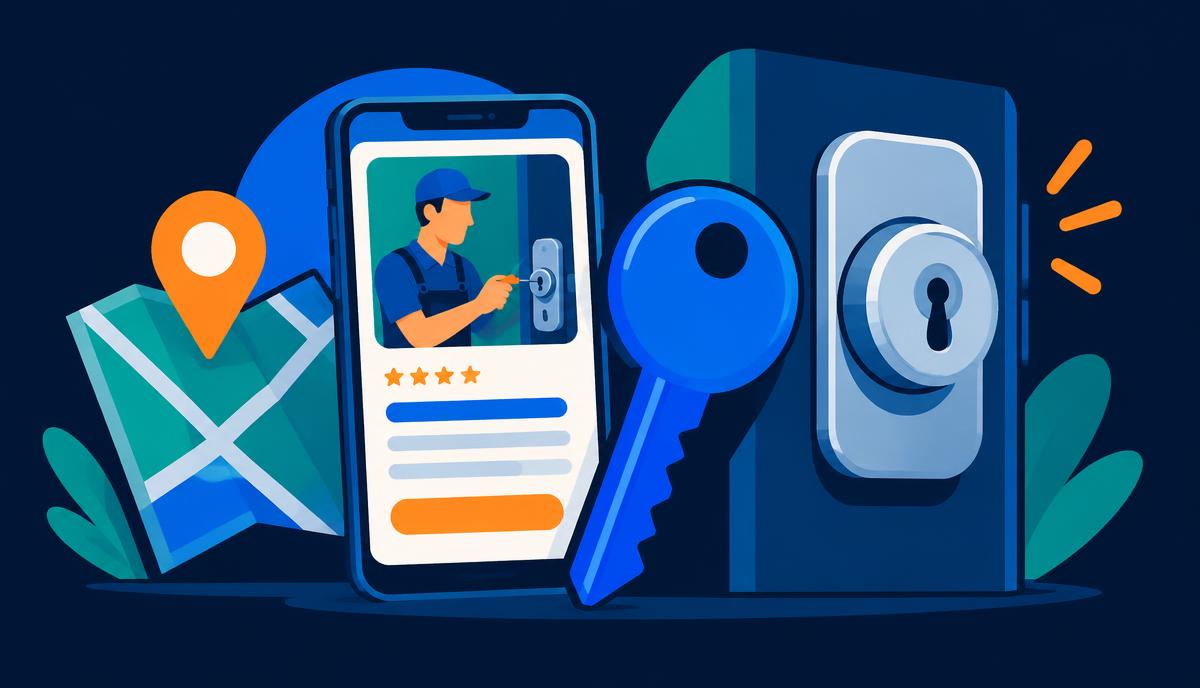
A locksmith gets more emergency calls by appearing at the top of Google and Maps in their service area, with ads that invite a call and a phone that is answered immediately. Keep emergency work separate from planned jobs and block do-it-yourself searches.
Last updated:
Introduction
Developing a robust advertising strategy for a locksmith business requires a fundamental understanding of consumer behavior in moments of crisis. Unlike retail or general service industries where customers might spend days or weeks researching their options, the locksmith sector is dominated by immediate, high-intent needs. When a homeowner is standing outside their front door in the rain at midnight, they are not looking for a brand story; they are looking for a solution that is local, credible, and immediately available.
How locksmith customers search
Most locksmith searches are born out of genuine urgency. Whether someone is locked out, has lost a key, or needs a lock changed immediately following a break-in, the psychological state of the customer is one of stress and haste. They typically reach for their cell phone as the first point of contact, conducting a quick search for local providers. Because of the nature of the emergency, these users rarely scroll past the first few results or spend time navigating deep website hierarchies.
Digital channels that fit the locksmith trade
Choosing the right platforms is essential to ensure your budget is not wasted on audiences who are not ready to book. For a locksmith, the intent behind the search is more important than the volume of the search. You need to be present exactly when the problem occurs, which necessitates a search-led rather than a social-led approach for emergency work.
- Google Search with call-focused ads: This remains the core channel for urgent jobs, allowing you to bid on high-intent keywords like emergency locksmith near me.
- Local Services Ads: Where available, these show verified businesses at the very top of the search results, providing a Google Screened or Google Guaranteed badge that significantly boosts trust.
- Microsoft Advertising: Often overlooked, this serves as a lower-competition companion channel that can capture older demographics or corporate users searching from desktop environments.
- Social Media Advertising: These platforms are best reserved for planned work only, such as promoting security upgrades, smart lock installations, or CCTV systems, rather than emergency lockouts.
Setting up the account for maximum call volume
A common pitfall for trades businesses is attempting to cover too much ground too quickly. For emergency locksmiths, geography and timing are the two most critical variables. If you advertise in a town that takes you two hours to reach, the customer will likely cancel the job once they hear the arrival time, resulting in a wasted lead cost.
- Geographic precision: Target only the specific ZIP codes or radii that you can genuinely reach within a reasonable timeframe.
- Smart scheduling: Align your ad bids with the hours you actually have someone available to answer the phone and attend the site.
- Call-centric assets: Utilise call assets and design a landing page with a click-to-call button permanently fixed at the top of the mobile screen.
- Budget segmentation: Separate emergency lockout campaigns from planned maintenance or lock upgrades so that each objective has its own dedicated budget.
Common mistakes in locksmith advertising
Many locksmiths find their marketing budget disappears with very little to show for it because of poor keyword hygiene and technical oversights. One of the most frequent errors is using broad match keywords that trigger ads for irrelevant queries. For instance, if you bid on the word locks, you might pay for clicks from people looking for lockers, bike locks, or even people looking for employment in the locksmith industry.
- Negative keyword neglect: Failing to exclude terms like DIY, training, cheap locks, or YouTube guides.
- Radius leakage: Paying for clicks from users located outside your service area due to loose location settings.
- Unattended ads: Running campaigns during hours when no one is available to pick up the phone and book the job.
- Poor lead definition: Counting every single call as a success, including wrong numbers, sales calls, and inquiries that last less than five seconds.
Measuring jobs instead of just clicks
Success in locksmith advertising is not measured by how many people saw your ad or even how many people clicked it. The only metric that truly matters is the number of booked jobs and the subsequent revenue generated. To achieve this, you must implement robust conversion tracking that goes beyond simple page views. This involves tracking calls that originate directly from the ad as well as calls made after a user has visited your website.
By setting a minimum call length to count as a real inquiry, you can filter out the noise and focus on high-quality leads. Feeding this qualified data back into the advertising platform helps the machine-learning algorithms understand what a 'good' customer looks like. Over time, the system will get better at finding people who are likely to stay on the phone and book a technician, rather than those who are just price-shopping or calling by mistake.
- Implement dynamic number insertion to track which keywords led to which phone calls.
- Review call recordings to identify common objections and refine your ad copy to address them upfront.
- Analyze the cost per booked job rather than the cost per click to understand your true return on investment.
- Regularly update your negative keyword list based on the actual search terms that triggered your ads.
Refining the landing page experience
Once a user clicks your ad, the landing page must confirm they have made the right choice within milliseconds. For an emergency locksmith, this means a clean, fast-loading mobile page that emphasises local presence and immediate availability. Avoid large blocks of text or complex navigation menus that distract from the primary goal: making a phone call.
Practical elements like professional body associations, clear pricing structures, and photos of the actual locksmith or the branded van can significantly increase the conversion rate. These visual cues build trust quickly, assuring the customer that a legitimate professional will be arriving at their property. Ensure that the phone number is not just visible but is a large, tappable button that works perfectly on all mobile devices.
When to bring in a specializt agency
Managing a high-intensity advertising account while also out on the road attending jobs is a difficult balancing act. If you find that you are spending a significant amount of money every month but cannot clearly identify which calls resulted from your ads, it is a sign that your tracking is inadequate. Similarly, if you are receiving high volumes of calls from the wrong areas or for services you do not provide, the issue is usually with the account setup rather than the budget itself.
An agency specializing in trades can review your account to tighten targeting, improve keyword relevancy, and ensure that every pound of media spend is measured down to the specific inquiry. By outsourcing the technical management of your campaigns, you can focus on what you do best: getting people back into their homes and securing their properties, while knowing your marketing is working efficiently in the background.
More articles
 Google Ads for Plumbers: How to Get More Plumbing Jobs
Plumbers get more jobs from Google by splitting campaigns by job type — emergencies versus planned work — and targeting each to their service area. Block irrelevant searches and measure which calls actually became jobs.
 How to Get More Electrician Jobs with Google Ads
Electricians get more jobs from Google Ads by running separate campaigns for urgent faults, planned installations and commercial clients. Ads that show credentials, plus tracking of real inquiries, show where the budget should go.
 HVAC Advertising: Planning Campaigns Around the Seasons
Heating and air conditioning businesses advertise year-round by planning budgets around the seasons, increasing spend in hot or cold spells and reducing it in quiet periods. Separate repairs from installations, and keep existing customers through service and maintenance plans.
 What Happened to Google Guaranteed? The New Google Verified Badge Explained
Google Guaranteed has been replaced by the Google Verified badge, and Local Services Ads are gradually moving inside Google Ads. You still pay per lead, and you still need to pass verification to get the badge.
 How to Advertise on Google Maps and Show Up in 'Near Me' Searches
To show up in 'near me' searches on Google Maps you need a complete, verified Business Profile, genuine reviews and local ads linked to that profile. The profile decides whether you appear; the ads help you appear when competition is high.
 What Are Google Local Services Ads, and Are They Worth It for Trades?
Google Local Services Ads are ads at the top of Google for verified tradespeople, where you pay per lead rather than per click. They are worth it mainly for businesses that pass verification, answer the phone quickly and keep good reviews.
 Call Tracking for Trades: From Phone Call to Job Profit, and Back to Google Ads
You know how much profit each call brought by linking the call to the job in your job system and calculating profit after materials, labour and travel. Then send that value back to Google as an offline conversion so the campaign learns to bring more profitable jobs.
- How to Set Up and Update a Google Business Profile: A Guide for Trades
You create a Google Business Profile by searching for your business name or going to business.google.com, setting your service areas and verifying, usually by video. You update it from Google Search or the Google Maps app.
 How to Get Your Contractor Business Listed in Local Directories
Get listed in local directories using the same business name, address and phone number everywhere, starting with the most important directories in your country and trade. Consistent listings help customers and Google trust the business, without paying for promises.
- How to Run Google Ads With Local Services Ads on One Budget (and What to Expect)
Combine the two by letting Local Services Ads capture leads at a per-lead price while a search campaign covers services and areas they do not. Split one monthly budget by demand for each job type, and expect results to improve gradually rather than on day one.
 What Do You Need for Local Services Ads? Requirements and Job Types by Trade
Before a Local Services Ads campaign, prepare the licence and insurance documents Google requires for your trade, your service areas, opening hours and a list of job types. This preparation shortens verification and prevents leads for work you do not do.
 What Do Chat Ads Look Like? ChatGPT Ads Examples for Contractors
Chat ads look like a short card marked 'Sponsored' below an answer, with a headline, one line of text and a button. A good chat ad answers exactly the question asked in the conversation, as the trade examples on this page show.
 How to Save Money on Google Ads and Paid Advertising
You save money on paid advertising by giving each campaign one clear goal, blocking searches that never bring customers and measuring real inquiries rather than clicks. Start with small tests and move budget only to what has proven itself.
- Google Ads Best Practices: What to Do in Every Campaign
Every Google Ads campaign should start with working conversion tracking, keywords that match the service and a landing page that answers the search exactly. After launch, review search terms weekly and decide monthly what to scale and what to stop.
 Common Google Ads Mistakes (and How to Avoid Them)
The most common Google Ads mistakes are running without conversion tracking, matching keywords too broadly, sending everyone to the homepage and judging results too early. You avoid them with organized tracking, negative keywords and a landing page for each service.
- How Do ChatGPT Ads Work, and Are They Worth It?
ChatGPT Ads are clearly labelled ads shown below ChatGPT answers, managed through OpenAI's Ads Manager and targeted by conversation context rather than exact keywords. They are worth testing when your service comes up in those conversations, the format is available in your country and you measure real leads.
- How Much Does Google Ads Cost for a Small Business?
There is no fixed price: what Google Ads costs a small business depends on competition in your trade and area, how well the campaign is built and how management is charged. Media spend and management fees are separate, so understand both before you start.
 Are Bing Ads Worth It for Small Businesses?
Yes, for many small businesses Bing Ads are worth it, because Microsoft Advertising reaches an additional audience, often at a lower cost per click than Google. If you already run Google Ads you can import your campaigns and start on a small budget.
Let's Find the Right Approach for Your Business
Tell us what you're trying to achieve and we'll suggest a sensible starting point.